.jpg?width=50&name=Shobana_Anpalagan_Profile%20(1).jpg)

In the healthcare sector, supply chain management is far more than an operational cost center; it...
As executive leadership reviews long-term capital allocation and operational strategy, navigating these technological changes requires dedicated focus and expert consensus. Strategic discussions surrounding ai in recruitment trends 2026, workforce sustainability, and modern engagement will take center stage at the upcoming Healthcare HR Summit 2026. Key industry panels will cover critical agendas including AI and Modern Engagement: Scaling Intelligent Workflows and Human Connection, offering actionable roadmaps for executive teams.
Understanding how automated tools integrate into complex talent architectures is essential for driving efficiency while upholding standard operating procedures and patient-care standards.
The Landscape of AI in Recruitment Trends 2026
The application of artificial intelligence in talent acquisition has transitioned from simple, rule-based software to intelligent workflow management. Rather than replacing human decision-making, current applications act as assistive layers that optimize administrative tasks.
Key Evolutions in Talent Acquisition Architecture
- Automated Candidate Sourcing and Matching: Advanced algorithms evaluate large volumes of applicant data to match specific skill profiles with open positions. This reduces manual resume screening time for recruiters.
- Predictive Pipeline Analytics: Systems evaluate historical hiring data, local market talent density, and seasonal turnover patterns to forecast future staffing needs.
- Intelligent Administrative Automation: Chatbots and conversational interfaces manage initial applicant inquiries, gather preliminary information, and coordinate interview schedules.
According to industry research from Korn Ferry, the integration of intelligent tools allows organizations to cut time-to-fill metrics while expanding access to qualified applicant pools. Additional data from Starred highlights that candidate feedback loops automated through digital platforms yield higher response rates, giving organizations clearer insights into applicant sentiments.
Optimizing Workflows Through Modern HR Technology
While health systems continue investing in digital transformation, adoption quality remains uneven. According to recent data from SHRM, only 43% of executives and HR leaders rate their current HR technology as effective, signaling a major opportunity for operational improvement.
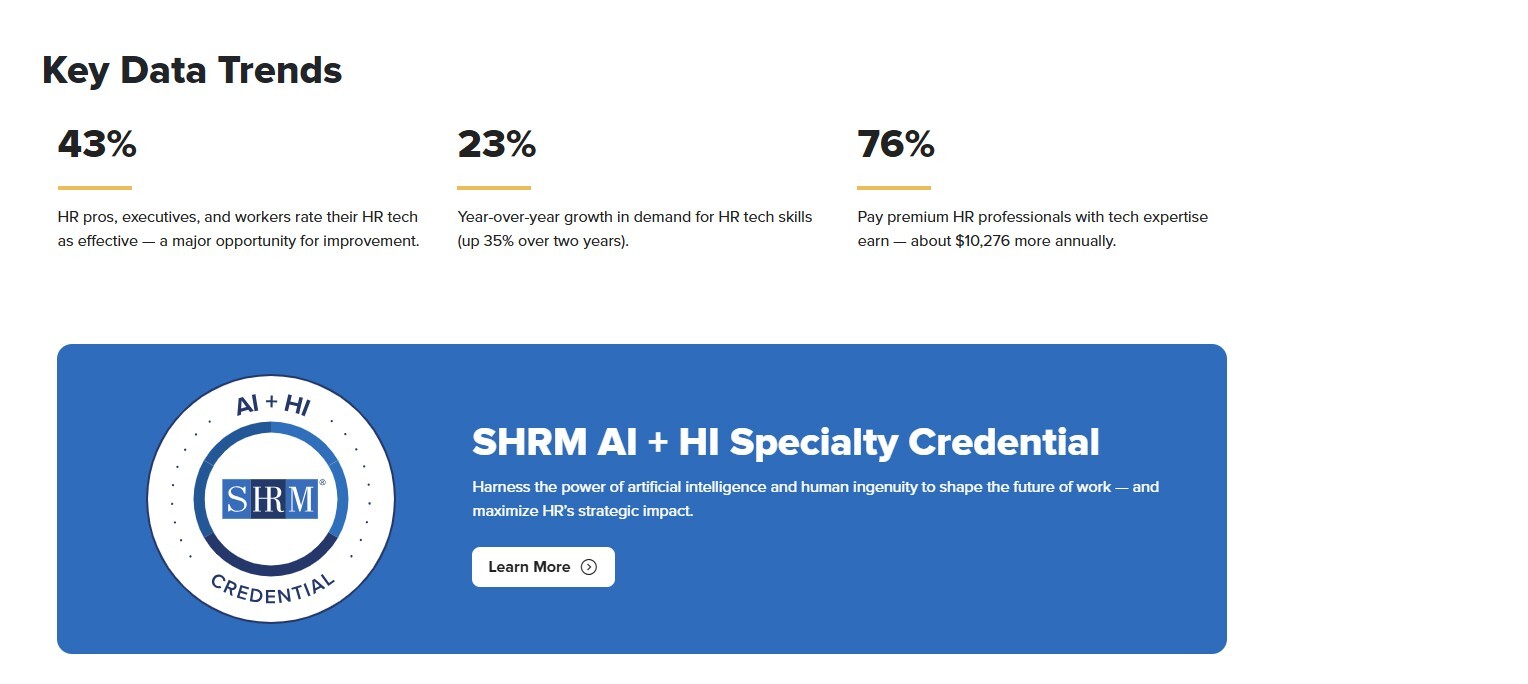
Image Source: SHRM
At the same time, demand for technical expertise within talent management has grown 23% year-over-year, with skilled HR tech leaders commanding significant pay premiums.
To bridge this effectiveness gap, health systems are changing from fragmented tools toward unified workflows that streamline candidate handoffs:
1. Resume Screening
- Traditional Practice: Manual review by talent specialists, which takes up hours of administrative time and creates hiring bottlenecks.
- Modern Tech-Enabled Workflow: Algorithmic skill matching and instant gap analysis that automatically highlights top applicants based on qualification criteria.
2. Interview Scheduling
- Traditional Practice: Back-and-forth email communications to find overlapping open slots between candidates and hiring managers.
- Modern Tech-Enabled Workflow: Self-service automated calendars that allow candidates to pick an available time slot directly, cutting down coordination delay.
3. Credential Verification
- Traditional Practice: Paper-based checks across individual registries, leaving room for manual error and prolonged candidate onboarding.
- Modern Tech-Enabled Workflow: Automated real-time primary source verification that instantly validates licenses and certifications against official databases.
4. Candidate Engagement
- Traditional Practice: Periodic manual updates sent by recruiters, often leaving applicants uninformed about where they stand in the hiring process.
- Modern Tech-Enabled Workflow: Continuous conversational updates via automated messaging, keeping candidates engaged and informed at every stage of the process.
Streamlining Administrative Pipelines
Healthcare operations face unique friction during candidate onboarding, particularly regarding medical licensing, background verification, and clinical credential checks. Implementing integrated platform architectures helps automate these administrative handoffs.
Insights provided by ADP demonstrate how unified digital infrastructures reduce data fragmentation across health system operations. Furthermore, resources from SHRM emphasize that modern tech deployments must focus on user experience to minimize software fatigue among administrative staff.
Balancing Intelligent Automation with Human Connection
While software handles repetitive high-volume tasks, clinical care remains an intensely human-centered field. Leading health organizations apply technology to handle operational friction, allowing recruitment teams to spend more direct time engaging with candidates.
High-Touch Candidate Experiences
- Reducing Friction: Candidates complete pre-screening steps on mobile devices, preventing drop-off during lengthy application procedures.
- Personalized Communication: Automated systems deliver timely updates regarding application status, maintaining clear dialogue without adding manual workload to recruiters.
- Focus on Cultural Fit: Sparing recruiters from manual data entry gives them time to conduct thorough, structured interviews focused on team compatibility and mission alignment.
Navigating Regulatory and Compliance Realities
The use of software tools in employment decisions introduces regulatory responsibilities. Health systems must ensure that automated algorithms operate fairly, maintain data privacy, and adhere to labor laws.
Governance and Compliance Guidelines
- Auditability: Organizations must understand how screening algorithms rank or filter candidate applications to prevent systemic bias.
- Data Privacy: Personal identification details and candidate disclosures must be securely stored and processed in compliance with healthcare data regulations.
- Human Oversight: Final hiring decisions, compensation offers, and qualification verifications must involve direct human review.
TriNet provides detailed analysis on internal regulatory duties, while MedTrainer outlines specific organizational divisions between compliance officers and operational teams.
For a structured overview of policy enforcement across internal departments, review guidance from TechFunnel.
Actionable Strategy for Executive Leadership
To successfully implement emerging talent technologies, healthcare executives must establish a clear roadmap that aligns software capabilities with patient care priorities.
- Audit Existing Workflows: Identify specific administrative bottlenecks in the hiring pipeline, such as delays in interview scheduling or credential verification.
- Establish Governance Standards: Define operational guidelines for automated tools, ensuring algorithmic transparency and adherence to employment laws.
- Prioritize Integration: Choose software tools that easily exchange data with current operational systems to avoid isolated data silos.
- Invest in Team Training: Equip talent acquisition teams with training on modern platforms while emphasizing candidate relationship management.
Are you interested in exploring these strategies further at the Healthcare HR Summit 2026?
Enquire here to join leading healthcare executives and discover how to optimize your talent acquisition and workforce management.
Frequently Asked Questions
How does AI impact time-to-hire in healthcare settings?
Automated tools speed up initial stages such as sourcing candidates, screening resumes for required licenses, and scheduling interviews. By removing these manual bottlenecks, health systems can move qualified clinicians through the hiring pipeline faster.
Can automated tools replace recruiters in clinical hiring?
No. In healthcare, human judgment is required to evaluate clinical competency, candidate adaptability, and cultural fit. Software serves as an assistive tool to handle administrative tasks, enabling recruiters to focus on candidate relationships.
What are the main compliance risks when using AI for recruitment?
Key risks include unintended bias in applicant screening algorithms, non-compliance with local labor regulations, and improper handling of sensitive candidate data. Healthcare organizations must maintain human oversight and regularly audit automated systems.
How do modern recruitment systems integrate with existing HR technology?
Most modern platforms use secure Application Programming Interfaces (APIs) to connect with enterprise resource planning systems, applicant tracking tools, and credential verification databases. This allows smooth data flow without requiring duplicate data entry.