

Ecommerce packaging solutions affect more than how a product reaches a customer.
They influence shipping costs, product damage, warehouse productivity, material use, and the customer experience. For businesses handling a wide range of online orders, packaging decisions can create unnecessary costs when they focus only on the purchase price of a box or mailer.
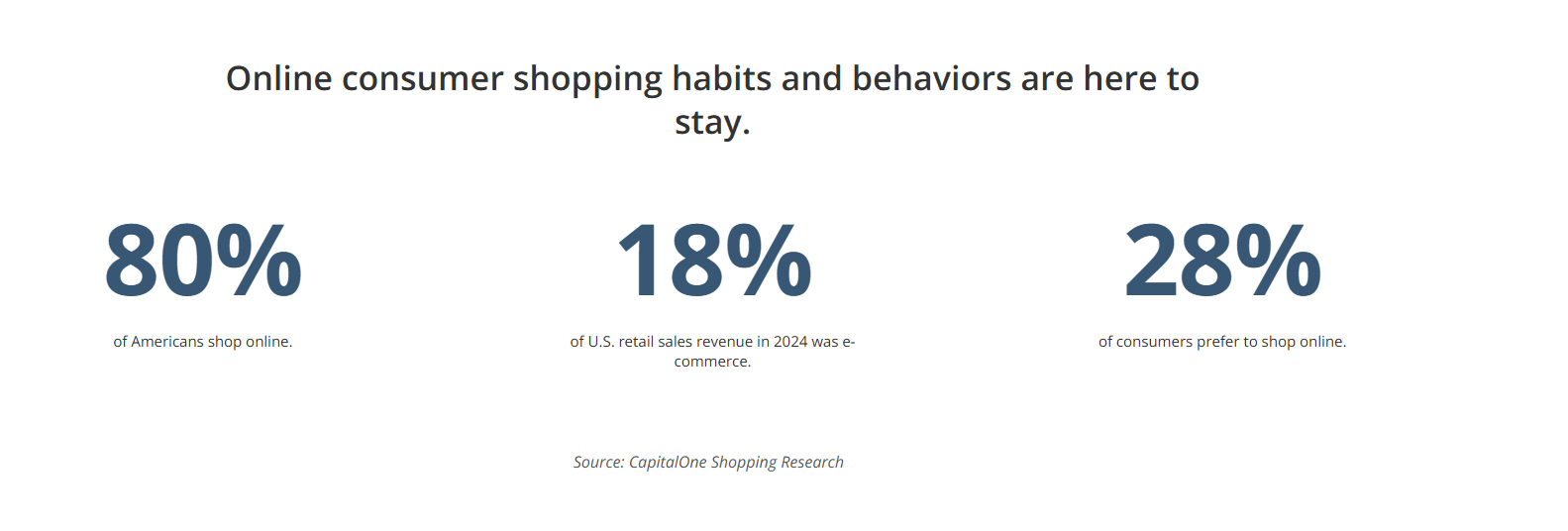
Image Source: Online shopping statistics highlighted by Packaging Corporation of America (PCA). Source: Capital One Shopping Research, as cited on PCA’s website.
Packaging leaders need to assess how each solution performs from packing through delivery and, where relevant, returns. This means balancing product protection, package dimensions, material requirements, fulfilment efficiency and sustainability. The objective is not simply to find the cheapest packaging option, but to identify an approach that meets business requirements at an acceptable total cost.
These considerations will also feature in discussions at the AmericaPack Summit 2027, where packaging leaders will explore packaging innovation, material choices, cost efficiency and supply chain challenges. The summit provides an opportunity to exchange practical insights on evaluating packaging solutions against commercial and operational requirements.
E-commerce packaging is one of several areas shaping the future of packaging innovation, alongside smart technologies, automation and material development. Our guide to Packaging Innovation: The Future of Packaging explores these broader developments and their implications for packaging performance, costs and customer experience.
What should ecommerce packaging solutions include?
An effective ecommerce packaging solution covers the complete packed order, including the outer container, internal protection, closure, shipping label and packing method. Choosing the right box alone will not address every delivery risk.
Before evaluating packaging options, businesses should establish three sets of requirements:
- Product requirements: Dimensions, weight, fragility, surface sensitivity and protection needs.
- Distribution requirements: Shipping methods, handling conditions, order combinations and return requirements.
- Business requirements: Cost targets, packing procedures, presentation standards and environmental claims.
These requirements provide a basis for supplier comparisons, packaging trials and warehouse instructions. They also help different departments work from the same specifications rather than making packaging decisions independently.
The FedEx packing guidelines offer practical guidance on packaging selection, cushioning and sealing. Businesses should adapt these principles to their products, shipping arrangements, and testing requirements.
Choosing the right ecommerce packaging
The most suitable packaging format depends on the product, order configuration and delivery requirements. A flexible mailer may work well for a durable, lightweight product, while a fragile item or a multi-product order may require a rigid container and internal dividers.
Packaging leaders can begin with the following comparison.
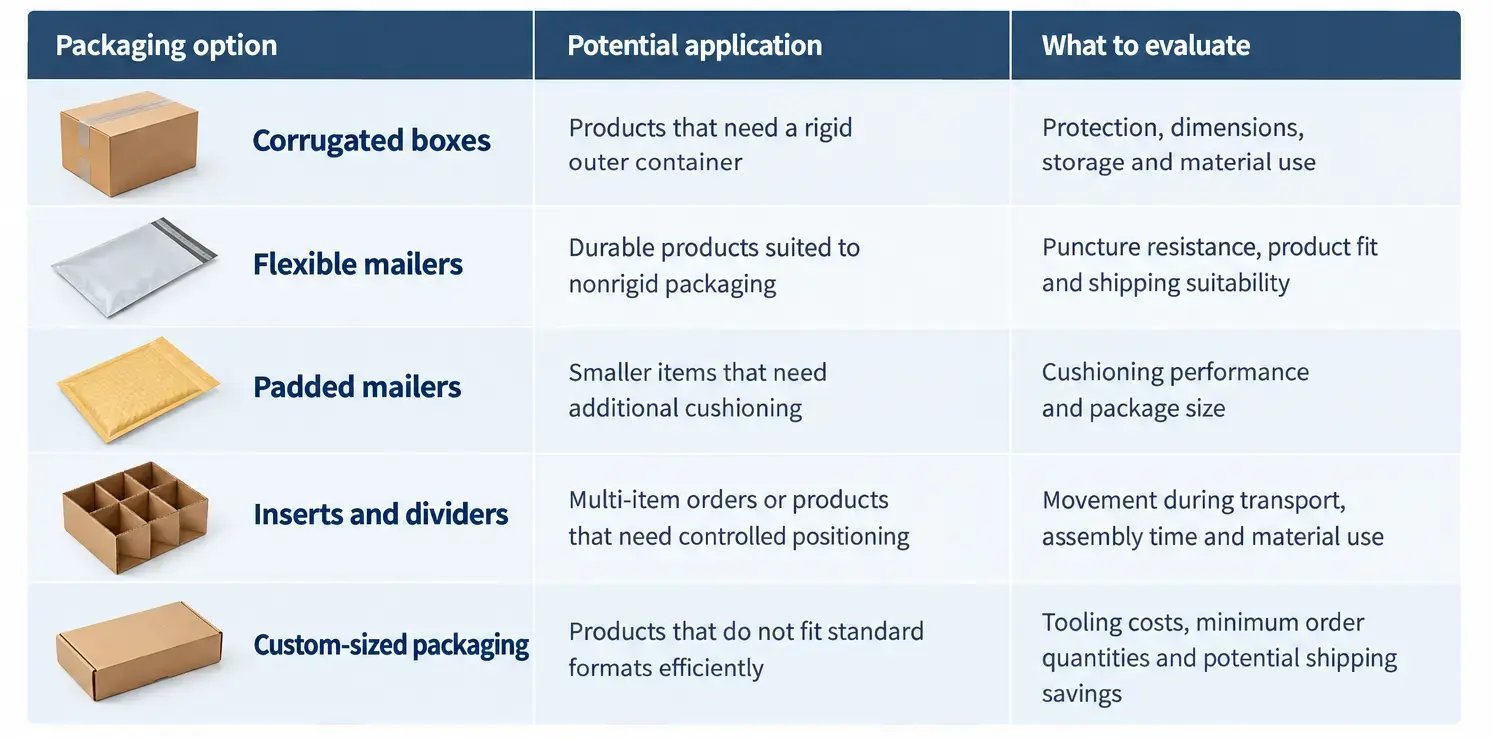
Image Source: Generated using ChatGPT (OpenAI)
These options are starting points rather than automatic recommendations. Businesses should test the complete package with the intended product and shipping conditions before approving a change.
Standard sizes or custom packaging?
Standard packaging can simplify purchasing, inventory management, and replenishment. However, a limited range of standard sizes may leave excessive space around certain products, requiring additional filler or creating larger shipping dimensions than necessary.
Custom packaging can improve product fit and reduce unnecessary material, but it may introduce tooling costs, minimum order quantities, storage requirements, and longer replenishment times.
Compare both options using actual order profiles. Ask suppliers to provide samples, specifications, pricing, lead times, and any setup charges. Approve a custom design when its demonstrated benefits justify its full cost, not simply because it offers a closer fit.
Reducing total packaging costs
Packaging purchase price is only one part of the total cost of fulfilling an order. Labour, transport, storage, damage and customer returns can also influence the financial outcome.
A useful cost assessment should include:
- Materials: Boxes, mailers, cushioning, inserts, tape, labels and printed components.
- Fulfilment: Packing time, equipment use, training, rework and assembly requirements.
- Transportation: Carrier charges and any applicable dimensional-weight pricing.
- Product damage: Replacements, refunds, damaged inventory and customer service costs.
- Inventory management: Storage space, excess stock, obsolete packaging and replenishment.
Package dimensions deserve particular attention. Carriers may calculate dimensional weight using a parcel's volume rather than relying solely on its actual weight. Depending on the applicable service and account terms, the chargeable weight may be based on whichever measure is greater.
The FedEx guide to dimensional weight explains this pricing principle. Businesses should confirm the relevant carrier rules before estimating the savings from smaller packaging.
Consider a business that ships the same product in a large standard carton. A smaller carton might reduce material consumption and shipping charges, but only if it still protects the product and fits the packing process. The evaluation should compare the existing and proposed formats using representative orders, measured packing times, quoted transport charges, and damage results.
This approach gives decision-makers a more reliable basis for approving packaging changes than comparing supplier prices alone.
Improving fulfilment efficiency
Packaging design also affects the speed and consistency of warehouse operations. A solution that protects a product effectively may still create problems if employees need excessive time to assemble it, add multiple layers of cushioning or adjust the package for each order.
Businesses should examine how packaging performs within the actual fulfilment process.
Standardise where possible. A manageable range of approved packaging formats can simplify training, storage and replenishment. However, standardisation should not force unsuitable products into the same package.
Reduce unnecessary packing steps. Review whether workers need extra tape, filler, manual cutting or repeated adjustments. A better-fitting format may reduce handling without compromising protection.
Assess automation requirements. Automated packing equipment may improve consistency and throughput, but businesses should consider equipment costs, package compatibility, maintenance and expected order volumes before investing.
Measure the complete process. Compare packing time, material consumption, package dimensions and damage rates. Faster packing alone does not establish an improvement if the change increases product damage or transport costs.
For businesses considering more advanced packaging technology, these decisions also connect to wider developments in Packaging Innovation: The Future of Packaging. Packaging automation and design improvements should address a defined operational need rather than introduce complexity without a measurable benefit.
Sustainability and material selection
Sustainable ecommerce packaging requires businesses to consider material use, product protection, and the conditions needed to recover or process packaging after use.
Start by identifying unnecessary material. Removing redundant layers or improving package fit may reduce resource consumption without requiring a complete change in material type. However, reducing packaging too aggressively can increase product damage, returns and replacement shipments, undermining the intended benefit.
When evaluating alternative materials, consider their performance alongside the availability of suitable collection, sorting and processing systems. A material's technical recyclability does not guarantee that customers can recycle it through local waste services.
The US Environmental Protection Agency's guidance on source reduction provides a starting point for examining opportunities to prevent unnecessary material use.
Businesses should also substantiate environmental claims. The US Federal Trade Commission's Green Guides explain how marketers should qualify environmental statements and avoid broad, unsubstantiated claims. These are US guidelines, so businesses should also check the requirements that apply in their target markets.
Before approving sustainability-related packaging claims, businesses should:
- Identify the specific packaging component covered by the claim.
- Obtain supporting documentation from suppliers.
- Check local collection and processing facilities for the intended market.
- Explain limitations and disposal instructions clearly.
- Review claims regularly when materials, suppliers or packaging designs change.
Packaging leaders should work with relevant sustainability, legal and marketing colleagues to verify claims before publication. Supplier descriptions alone may not substantiate every statement a business wants to make.
Packaging and customer experience
Customers experience packaging when they receive, open, use and dispose of an order. Packaging that protects the product but proves difficult to open may create frustration. Excessive material can also conflict with customer expectations, while insufficient protection may lead to damaged products and returns.
Evaluate the complete customer experience during packaging trials. Ask participants to open the package, remove the product, and follow any disposal or return instructions without assistance. Record difficulties with opening, product removal, packaging waste, and label placement.
Presentation should serve a clear purpose. Branding, inserts and additional layers may support the experience, but each component should justify its material cost and effect on fulfilment.
Businesses that want customers to reuse packaging for returns should test that process as well. Confirm that customers can close the package securely, manage the original shipping label and understand any additional requirements.
These checks help packaging leaders assess customer experience alongside protection and cost rather than treating presentation as a separate design decision.
Testing and implementing packaging changes
A packaging proposal should demonstrate its value before the business commits to a large purchase or wider rollout. A controlled trial can reveal issues that supplier samples or individual product tests may not identify.
A practical evaluation process includes six steps:
- Establish a baseline. Record current packaging costs, dimensions, packing time, damage rates and relevant customer complaints.
- Select representative orders. Include common order combinations, heavier products, fragile items and products with unusual dimensions.
- Define acceptance criteria. Agree on acceptable product condition, closure performance, packing time and presentation before testing begins.
- Test the complete package. Evaluate the outer container, internal protection, closure and intended product configuration together.
- Run an operational pilot. Ask warehouse personnel to use the proposed design under normal working conditions.
- Review results before scaling. Investigate failures, document restrictions and confirm whether the benefits justify implementation costs.
For example, a multi-item order should not receive approval solely because each product passed a separate packaging test. The combined order may create movement, pressure or contact between products that individual tests would not reveal.
Where appropriate, businesses can consult specialists such as FedEx Packaging Lab to discuss packaging design and testing options. The test method should reflect the product, shipping conditions and consequences of failure.
Retain specifications, photographs and test results as a reference for future supplier changes or design reviews.
Measuring packaging performance
After implementation, businesses need consistent measures to determine whether a new packaging solution delivers the expected results.
Four useful indicators are:
- Damage rate: Damaged shipments as a proportion of total shipments, using a consistent definition.
- Packaging cost per order: Material costs alongside relevant labour and transportation expenses.
- Packing time: Time required to prepare representative orders under normal operating conditions.
- Customer feedback: Complaints about damage, opening difficulty, excessive packaging and returns.
Review results by product group and packaging format. A single average may conceal differences between fragile products, standard orders and complex multi-item shipments.
Packaging leaders should also establish clear ownership for supplier approval, specifications, employee training, artwork and performance reporting. Require suppliers to obtain approval before changing agreed materials or dimensions, and maintain a documented process for handling defective deliveries.
Use the results to identify trade-offs. A packaging format that reduces material use but increases damage may not deliver an overall improvement. The objective is to evaluate performance across the full fulfilment process.
Making better ecommerce packaging decisions
The most effective ecommerce packaging solutions balance product protection, transport costs, material use, fulfilment requirements and customer expectations. No single format will suit every product or order, and the lowest purchase price does not always produce the lowest total cost.
Packaging leaders should establish clear requirements, compare complete costs, test proposed changes and measure performance after implementation. This gives the business a stronger basis for supplier discussions and investment decisions.
The AmericaPack Summit 2027 brings packaging executives together to discuss industry priorities and connect with relevant suppliers and solution providers. Leaders can review the summit agenda or enquire about participation to assess its relevance to their packaging priorities.
Frequently asked questions
1. How does ecommerce packaging affect shipping costs?
Ecommerce packaging affects shipping costs through parcel dimensions, weight, and the amount of material used. Oversized packages may increase dimensional-weight charges, while excessive packaging can add unnecessary material costs. Businesses can review package sizes and test better-fitting formats to reduce costs without compromising product protection.
2. How can ecommerce packaging reduce product damage during delivery?
Ecommerce packaging can reduce product damage by providing suitable cushioning, limiting product movement and protecting items against handling impacts during transit. Businesses should select packaging based on product weight, fragility and shipping conditions, then test the complete package before implementation.
3. How can businesses improve ecommerce packaging efficiency?
Businesses can improve ecommerce packaging efficiency by standardising suitable package sizes, simplifying packing procedures and reducing unnecessary handling steps. They can also assess automated packing equipment and review packing time, material consumption and order volumes to identify opportunities for improvement.
4. How can ecommerce packaging support sustainability goals?
Ecommerce packaging can support sustainability goals by reducing unnecessary materials, improving package dimensions, and selecting materials with suitable recovery or recycling options. Businesses should also consider product protection, since damaged shipments and replacement deliveries can increase overall material consumption.