

The EU Packaging and Packaging Waste Regulation (PPWR) introduces new requirements for packaging...
Circular packaging is becoming an important consideration for consumer packaged goods (CPG) companies looking to reduce packaging waste, meet sustainability requirements, and control costs. However, choosing recyclable materials is only one part of the process. Packaging must also protect products, run efficiently on production lines, and fit the collection or recovery systems available after use.
Circular economy packaging requires businesses to consider the full packaging lifecycle, from material selection and manufacturing to distribution, reuse and recycling. In practice, this means weighing real trade-offs: recyclable mono-materials often compromise barrier performance, and higher recycled content can affect cost and processing. Regulation increasingly shapes these decisions, from extended producer responsibility (EPR) fees to recycled-content mandates and the EU's Packaging and Packaging Waste Regulation (PPWR). As a result, circularity affects both compliance and cost.
These topics are also central to discussions at the EuroPack Summit 2027, where senior FMCG and packaging leaders will explore how to scale circular packaging without compromising cost or performance.
Why consider circular packaging?
Circular packaging aims to reduce waste and keep materials in use for as long as practical. Instead of producing packaging, using it once and discarding it, businesses can reduce material use, introduce reusable formats and improve recycling and recovery.
The Ellen MacArthur Foundation's work on plastics and the circular economy explains the importance of reducing unnecessary materials and keeping resources in circulation.
In practice, circular packaging can involve five main approaches:
- Reduce material use: Remove unnecessary components or reduce packaging weight without affecting product protection.
- Design for recycling: Select materials and package structures that work with available recycling systems.
- Use recycled content: Incorporate recovered materials where they meet quality, safety and performance requirements.
- Introduce reuse and refill: Design packaging that can serve multiple use cycles through suitable return or refill systems.
- Improve material recovery: Improve collection, sorting and processing so businesses can reuse materials.
These approaches are not suitable for every product. Packaging leaders must consider product requirements, production equipment, distribution networks and local recovery facilities before deciding which option to adopt.
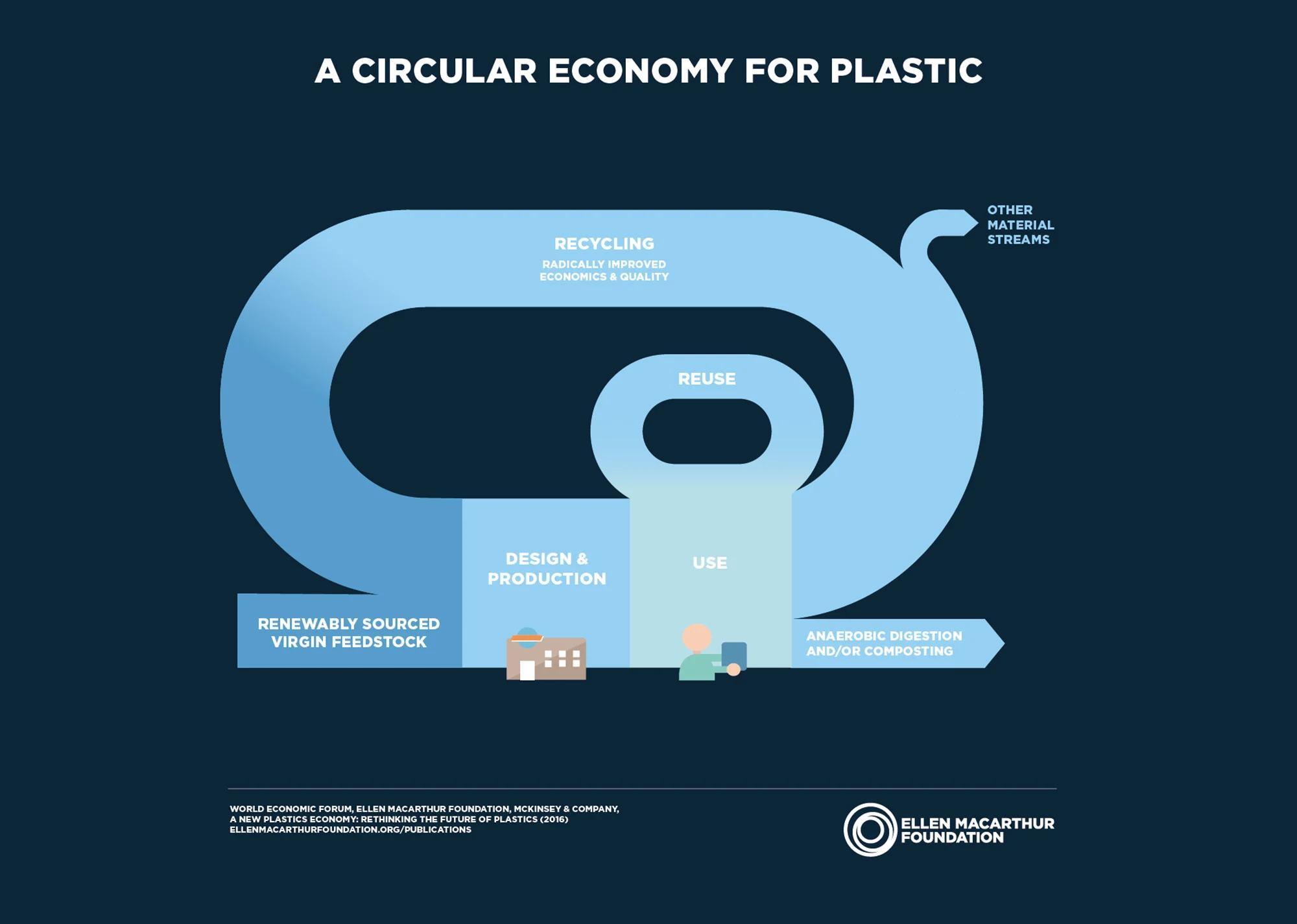
A circular economy for plastics. Source: Ellen MacArthur Foundation, World Economic Forum and McKinsey & Company.
The Ellen MacArthur Foundation's work on plastics and the circular economy explains the importance of reducing unnecessary materials and keeping resources in circulation.
Four Ways to Improve Circular Packaging
1. Reduce Material Use Without Affecting Product Protection
Reducing packaging material can lower purchasing costs and the amount of material used across a product portfolio. Businesses can review package dimensions, remove unnecessary components and reduce excess space in cartons and shipping cases.
However, using less material does not automatically produce savings. Reducing carton thickness, for example, may weaken stacking strength during warehouse storage or transportation. If this leads to product damage, returns or retailer chargebacks, the company may lose the savings it initially gained.
Packaging directors should assess material reduction against product damage rates, packaging quality, pallet utilisation and production performance. Testing proposed changes under realistic storage, handling and transport conditions can help confirm whether a new specification is suitable for commercial production.
2. Design Packaging for Recycling
Circular packaging also depends on whether materials can be collected and processed after use. Labels, adhesives, coatings, closures and combinations of different materials can affect how easily a package is sorted and recycled.
For example, a multilayer package may provide the barrier protection needed to maintain product quality but create difficulties during recycling. A simpler material structure may be easier to process, provided it still meets shelf-life, safety and manufacturing requirements.
Packaging leaders should distinguish between packaging that recycling facilities can technically recycle and packaging that waste management systems actually collect and process. Recycling access varies between markets, and not all facilities can handle every material.
Companies selling across several regions should review local collection and processing systems before adopting a single specification across their portfolio. The Recycling Partnership's Circular Packaging 101 provides further information on packaging design and recycling systems.
3. Assess the Cost of Reuse and Refill
Reusable packaging can extend the life of containers and reduce the need for replacement packaging. Examples include returnable beverage containers, refillable household product packaging and reusable transport items such as pallets, crates and totes.
However, circular economy packaging models based on reuse require a workable operating system. Businesses must consider return rates, cleaning, transport, storage, container losses and inventory management. Moving empty packaging back to a filling or distribution site can add costs and complexity.
A reusable container may also require more material to manufacture than a single-use alternative. The overall value of reusable packaging depends partly on how many times businesses reuse it and how many resources each reuse cycle requires.
Before introducing a reuse programme, packaging leaders should assess whether return systems, cleaning facilities and distribution arrangements can support repeated use at an acceptable cost.
4. Introduce Recycled Content Carefully
Using recycled content can return recovered materials to manufacturing. However, these materials must still meet the requirements of the packaging application.
Material quality, strength, colour, barrier performance, price and supply consistency can vary between suppliers. Food-contact packaging may also face additional safety and regulatory requirements, depending on the material and market.
Before approving recycled content, businesses should confirm material specifications, supplier capacity, quality controls and compatibility with existing production equipment. Trials can help packaging leaders identify sealing problems, slower production speeds or higher rejection rates before introducing a new material across multiple products.
Circular packaging initiatives are more likely to succeed when the selected materials meet both sustainability objectives and commercial production requirements.
The Business Costs and Risks to Consider
Circular packaging can reduce waste and material consumption, but implementation may require investment in new materials, equipment, testing, or recovery systems. Packaging leaders should consider several factors before approving changes.
Total cost, not material price alone
A lighter package may reduce material expenditure but increase product damage. A new recyclable format may require tooling changes, while reusable packaging may add transport, cleaning and storage expenses.
Businesses should compare existing and proposed formats using consistent measures, including material costs, production speed, rejection rates, transport costs, product damage and implementation expenses. This helps identify whether a change delivers genuine savings or simply transfers costs elsewhere.
Supplier capacity and quality
A new specification may depend on materials that fewer suppliers can provide. Before implementation, procurement and packaging development leaders should confirm availability, quality consistency, lead times and production capacity.
Clear specifications and quality controls are particularly important when introducing recycled content or changing materials that affect product protection and shelf life.
Manufacturing and distribution
Changes to packaging dimensions, stiffness or sealing properties can affect filling, labelling, packing and palletisation. They may also require adjustments to production equipment or quality controls.
Packaging must continue to meet warehouse, transportation and retailer requirements. Involving manufacturing, logistics, procurement and suppliers early can help identify issues before full-scale production begins.
Regulatory requirements
Extended producer responsibility (EPR) regulations and other packaging rules can affect material selection, reporting and the costs associated with packaging placed on the market. Requirements vary between jurisdictions, so companies should confirm which obligations apply to each market.
For an overview of U.S. packaging obligations, see the U.S. Packaging EPR Checklist for 2027.
How to Evaluate a Circular Packaging Initiative
Before approving a circular packaging project, packaging directors should ask:
- What is the objective? Is the priority to reduce material use, improve recyclability, introduce recycled content or support reuse?
- Will the package protect the product? Check shelf life, strength, handling and transport requirements.
- Can it run on existing equipment? Review production speed, sealing, rejection rates and potential equipment investment.
- Can suppliers meet demand? Confirm material availability, quality and lead times.
- Is recovery or reuse practical? Assess recycling access, return rates, cleaning and transport arrangements.
- What is the total cost? Include materials, testing, tooling, logistics, product damage and ongoing operating expenses.
- How will success be measured? Track packaging weight, recycled content, reuse cycles, production performance, recovery outcomes and total cost.
Testing a proposed format before a wider rollout helps businesses identify technical issues and determine whether the change delivers the intended results. It also provides evidence to support decisions about expanding the initiative across other products or markets.
Making Circular Packaging Work at Commercial Scale
Circular packaging requires more than selecting materials with better recycling potential. Businesses must consider product protection, manufacturing performance, supplier capacity, distribution and recovery systems together.
The right approach will depend on the product, market and operating requirements. By setting clear objectives, testing proposed changes and measuring total costs, packaging leaders can identify solutions that support circularity while meeting commercial needs.
At the EuroPack Summit 2027, senior FMCG and packaging leaders can discuss circular economy packaging, material innovation, recyclability and European packaging requirements with industry peers and solution providers.
Explore the EuroPack Summit 2027 agenda or enquire about attending to learn more.
Frequently Asked Questions
1. What is circular packaging?
Circular packaging helps businesses reduce waste and keep materials in use for as long as possible. It focuses on reducing unnecessary packaging, reusing containers, incorporating recycled materials, and improving recycling and recovery after use.
2. What is the difference between circular packaging and sustainable packaging?
Sustainable packaging covers a broad range of environmental considerations, including material use, product protection, and transportation impacts. Circular packaging focuses specifically on reducing waste and keeping packaging materials in circulation through reduction, reuse and recycling. Circularity is one part of a wider sustainability assessment.
3. How does circular economy packaging benefit businesses?
Circular economy packaging helps businesses identify opportunities to reduce material consumption, improve resource efficiency and manage packaging costs. However, the benefits depend on factors such as material availability, production requirements, product protection and the recovery systems available in each market.
4. What are the main challenges of implementing circular packaging?
Common challenges include the cost of changing packaging materials, compatibility with existing production equipment, inconsistent recycled material supply and limited recycling infrastructure. Reusable packaging can also require additional transport, cleaning and return systems. Businesses should assess these factors before introducing changes across their product portfolios.
5. How can businesses measure the success of circular packaging initiatives?
Businesses can track packaging weight per unit, recycled content, reuse cycles, product damage rates, production rejection rates and total packaging costs. They should also assess whether packaging reaches suitable collection and recovery systems. The most useful measurements depend on the objectives of each initiative.