

European packaging leaders face growing pressure to understand and manage Extended Producer...
The EU Packaging and Packaging Waste Regulation (PPWR) introduces new requirements for packaging design, material composition, recyclability, reuse and waste management. Since the regulation began applying on 12 August 2026, businesses placing packaging on the European Union market need to understand which requirements apply to their products and what they must do to demonstrate compliance.
PPWR compliance is a central theme at the EuroPack Summit 2027, where Europe's packaging leaders gather to exchange perspectives on regulatory readiness, sustainable packaging, and circular supply chains.
Packaging changes can affect more than material selection. They may influence supplier costs, production processes, product protection and transport efficiency. Businesses should therefore review their existing packaging, identify applicable requirements and work with suppliers to address any gaps.
The following EU PPWR compliance steps for businesses provide a practical starting point.
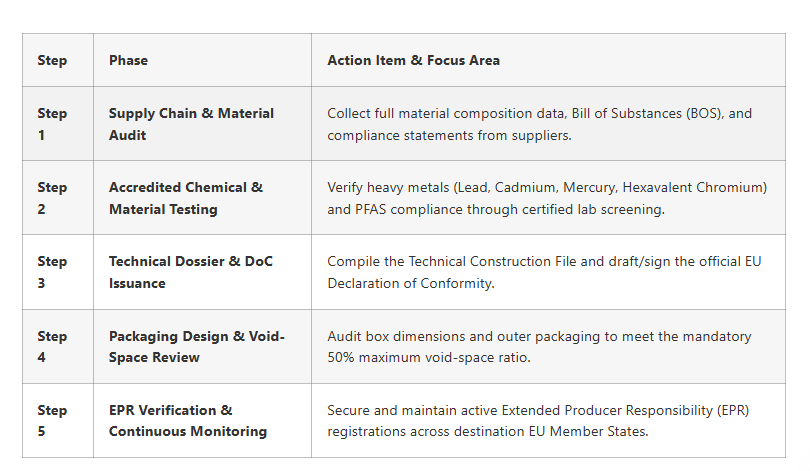
Image Source: HQTS | Roadmap: How to Navigate PPWR Compliance Step-by-Step
Step 1: Identify Which EU PPWR Requirements Apply to Your Business
Start by establishing how the PPWR applies to your business, products and packaging formats.
The regulation covers packaging made from materials such as plastic, paper, cardboard, glass and metal. However, specific obligations depend on the packaging type, the business's role and the relevant provision.
Identify the following:
- Markets served: Determine which EU countries receive your products and packaging.
- Business responsibilities: Establish whether your company acts as a manufacturer, importer, distributor or another economic operator.
- Packaging formats: List the sales, grouped, transport and e-commerce packaging used across your product range.
- Applicable requirements: Check which rules apply to each format, including relevant exemptions and transitional arrangements.
Businesses selling products in several EU countries should also review national requirements, particularly extended producer responsibility (EPR) registration and reporting.
Step 2: Audit Existing Packaging Materials and Formats
Once you understand the applicable requirements, review your existing packaging to identify materials, components and formats that may need further assessment or changes.
Packaging that protects a product during manufacturing and transport may still pose challenges for recyclability, packaging minimisation, or reuse requirements.
For each packaging format, record:
- Material composition, including plastic, paper, metal and glass components.
- Coatings, adhesives, inks and other components that may affect recycling.
- Packaging weight, dimensions and material usage.
- Product protection requirements and performance during transport.
- Existing recyclability assessments and supporting evidence.
- Opportunities to reduce unnecessary packaging or introduce reusable formats.
For example, a multilayer flexible pouch may provide an effective moisture barrier and protect a product during transport. However, its combination of materials may create recycling challenges. The business should assess whether the format meets applicable requirements and whether an alternative can provide the necessary protection.
Packaging redesign should consider product performance as well as material selection. A lighter package may reduce material use but increase product damage if it provides insufficient protection. Any proposed changes should be assessed against manufacturing requirements and distribution conditions.
For further information, read the Clarity guide to understanding the PPWR and Greif's overview of the regulation.
Step 3: Review Recycled Content and Restricted Substances
Businesses should determine whether their packaging is affected by recycled-content targets or restrictions on certain substances.
Under the PPWR, minimum recycled-content requirements apply to specified categories of plastic packaging, with targets for 2030 and 2040. The required percentages vary by packaging category and the conditions set out in the regulation.
Businesses should:
- Identify packaging formats covered by recycled-content requirements.
- Review the availability and consistency of suitable recycled materials.
- Request supporting information from material suppliers.
- Assess how recycled content may affect product protection and manufacturing performance.
- Establish how compliance information will be collected and maintained.
Food-contact packaging also requires particular attention. Restrictions on PFAS in food-contact packaging began applying on 12 August 2026, subject to the regulation's concentration limits and applicable exceptions.
Businesses should review the relevant requirements with suppliers and obtain supporting information about material composition and compliance.
Changes to packaging materials may also affect costs and supply availability. Before approving a new specification, assess its technical suitability, supplier capacity and commercial implications.
Step 4: Check Packaging Labelling, Reuse and Empty-Space Requirements
The PPWR introduces requirements covering packaging labels, reuse and unnecessary packaging. Businesses should review each area to determine which obligations apply and when they take effect.
Packaging labellingThe regulation introduces harmonised labelling requirements to help consumers identify packaging materials and sort packaging waste correctly.
The general material-composition labelling requirement is scheduled to apply from 12 August 2028 or 24 months after the relevant implementing act enters into force, whichever is later.
Businesses should monitor the applicable rules and prepare to update packaging artwork, printing specifications and product information when required.
Reuse and refillReview whether specific packaging formats are subject to reuse requirements or targets. Depending on the application, businesses may need to assess reusable transport packaging, return systems or alternatives to single-use formats.
Before making changes, consider the practical requirements for collection, cleaning, handling, storage and transport.
Empty space and packaging minimisationThe PPWR addresses excessive packaging and unnecessary space. For grouped, transport and e-commerce packaging, the regulation sets a maximum empty-space ratio of 50%, subject to the applicable methodology and deadline.
Businesses should review carton dimensions, protective fillers and packing configurations to identify opportunities to reduce unnecessary space without compromising product protection.
For example, reducing carton dimensions may improve transport efficiency, but the revised format must still accommodate the product, protective materials and shipping requirements.
Packaging, logistics and manufacturing stakeholders should work together when assessing these changes.
Step 5: Collect Supplier Documentation and Demonstrate Compliance
Businesses need reliable information about the materials and components used in their packaging to assess compliance and maintain supporting records.
A packaging specification alone may not provide all the necessary evidence. Establish a process for requesting, reviewing, and maintaining documentation from packaging suppliers and other relevant partners.
Depending on the applicable requirements, documentation may include:
- Material composition and technical specifications.
- Information supporting recycled-content claims.
- Relevant chemical and food-contact compliance information.
- Recyclability assessments and test results, where applicable.
- Supplier declarations and other evidence required for conformity assessment.
- Records of packaging design changes and approvals.
Manufacturers should establish which technical documentation and EU declaration of conformity are required for their packaging. Other economic operators should understand their own obligations and ensure that relevant documentation is available when required.
A central packaging compliance register can help businesses track each packaging format, its supplier, technical specifications, applicable requirements and supporting evidence.
This is particularly useful when sourcing packaging from multiple suppliers or operating across several manufacturing sites. Consistent records help identify missing information and assess proposed material changes.
For additional guidance, consult the HQTS PPWR compliance guide.
Step 6: Review EPR Registration, Reporting and Compliance Costs
Businesses should review their extended producer responsibility obligations and the costs associated with packaging placed on the market.
EPR schemes generally require obligated producers to take responsibility for packaging waste management through measures that may include registration, reporting and financial contributions. Specific obligations depend on national rules, the business's role and the packaging concerned.
Businesses should:
- Confirm which EPR schemes apply in each relevant market.
- Check registration status and reporting responsibilities.
- Verify packaging data, including quantities and material categories.
- Review applicable fees and eco-modulation arrangements.
- Assign responsibility for maintaining accurate records and submitting reports.
Compliance costs extend beyond EPR contributions. Packaging redesign, material testing, recycled-content sourcing, supplier changes and production adjustments may also affect budgets.
For example, switching to a different packaging material may increase unit costs, require changes to packing equipment or affect transport efficiency. Assess these costs alongside potential savings from reduced material use or improved logistics.
This review can help businesses estimate costs, set priorities and assign responsibility for outstanding actions.
The Axell Group's PPWR overview provides further business-focused context.
EU PPWR Compliance Checklist for Businesses
After reviewing the main requirements, businesses can use the following checklist to organise their next steps.
- Identify the PPWR provisions applicable to the business and its packaging formats.
- Audit existing packaging materials, components and specifications.
- Assess applicable recyclability, recycled-content and restricted-substance requirements.
- Review packaging labelling, reuse and empty-space requirements against their respective deadlines.
- Obtain relevant material information and supporting documentation from suppliers.
- Determine the applicable conformity assessment and documentation obligations.
- Verify EPR registration, reporting requirements and associated costs in relevant markets.
- Assign internal owners to outstanding compliance actions.
- Monitor official guidance, implementing acts and upcoming regulatory milestones.
- Review packaging specifications regularly as materials, suppliers and requirements change.
Not every action will have the same deadline. Businesses should maintain a compliance schedule that distinguishes current obligations from requirements that will apply at later dates.
Preparing for the Next Stage of Packaging Compliance
The PPWR brings packaging design, material selection, supplier documentation and waste management into a more closely connected regulatory framework. Businesses that assess these areas together can identify potential compliance gaps earlier and make better-informed decisions about packaging changes.
For packaging leaders, the challenge is to meet regulatory requirements while maintaining product protection, manufacturing performance, material availability and cost control. This requires collaboration between packaging, procurement, sustainability, quality, regulatory and supply-chain functions.
These challenges are also central to discussions around sustainable packaging, PPWR readiness and circular supply chains. At the EuroPack Summit 2027, Europe's FMCG, retail and packaging leaders can benchmark strategies, exchange perspectives and discuss practical approaches to these shared priorities.
View the Agenda | Enquire About Attending
Businesses should continue to monitor official EU guidance and applicable national requirements as implementation progresses. A structured compliance process, supported by accurate packaging data and supplier documentation, provides a practical foundation for managing current obligations and upcoming changes.
Frequently Asked Questions
1. What is the EU Packaging and Packaging Waste Regulation (PPWR)?
The PPWR is Regulation (EU) 2025/40, which establishes requirements for packaging and packaging waste across the European Union. It covers packaging design, material composition, recyclability, reuse, labelling and waste prevention, to reduce packaging waste and improve circularity.
2. Which businesses must comply with the EU PPWR?
The regulation affects economic operators involved in packaging and products placed on the EU market, including relevant manufacturers, importers, distributors and other operators. Specific obligations depend on the operator's role, the packaging concerned and the applicable provisions.
3. What are the main EU PPWR compliance steps for businesses?
Businesses should identify applicable requirements, audit existing packaging, assess material and substance requirements, review labelling and reuse obligations, collect supporting documentation, and verify EPR registration and reporting responsibilities. They should also track implementation deadlines and assign responsibility for outstanding actions.
4. What packaging documentation is required under the PPWR?
The required documentation depends on the applicable provisions and the operator's role. It may include technical documentation, material specifications, relevant test results, and an EU declaration of conformity where required. Businesses should consult the applicable regulations and guidance to determine the precise documentation requirements for their packaging.
5. When do businesses need to comply with EU PPWR requirements?
The PPWR began applying on 12 August 2026, but individual requirements have different application dates and transitional arrangements. Some obligations apply from the general application date, while others, including certain recycled-content, recyclability and labelling requirements, follow later timelines.